The Mind Is Lying to You And You're Letting It
Most people don't form beliefs. They inherit them, defend them, and mistake that defense for conviction. The harder question isn't what you believe — it's why you believe it and what happens when the truth shows up uninvited.
“Believe half of what you see and none of what you hear.”
You Were Taught What to Think
From childhood, many of us were handed a set of beliefs and never asked to question them. We didn't choose them — we absorbed them. And once absorbed, the mind treats them as identity, not information.
That's where the problem starts.
The Image on the Wall
I grew up in a Christian household. There was an image of Jesus on our living room wall — pale skin, light eyes, European features. I walked past it every day. I avoided its gaze. It watched me in a way that made me feel exposed.
That image wasn't just a picture. It was a belief system hanging on a wall — one that went completely unquestioned for years.
Millions of homes share a similar image. Few have ever asked where it came from.
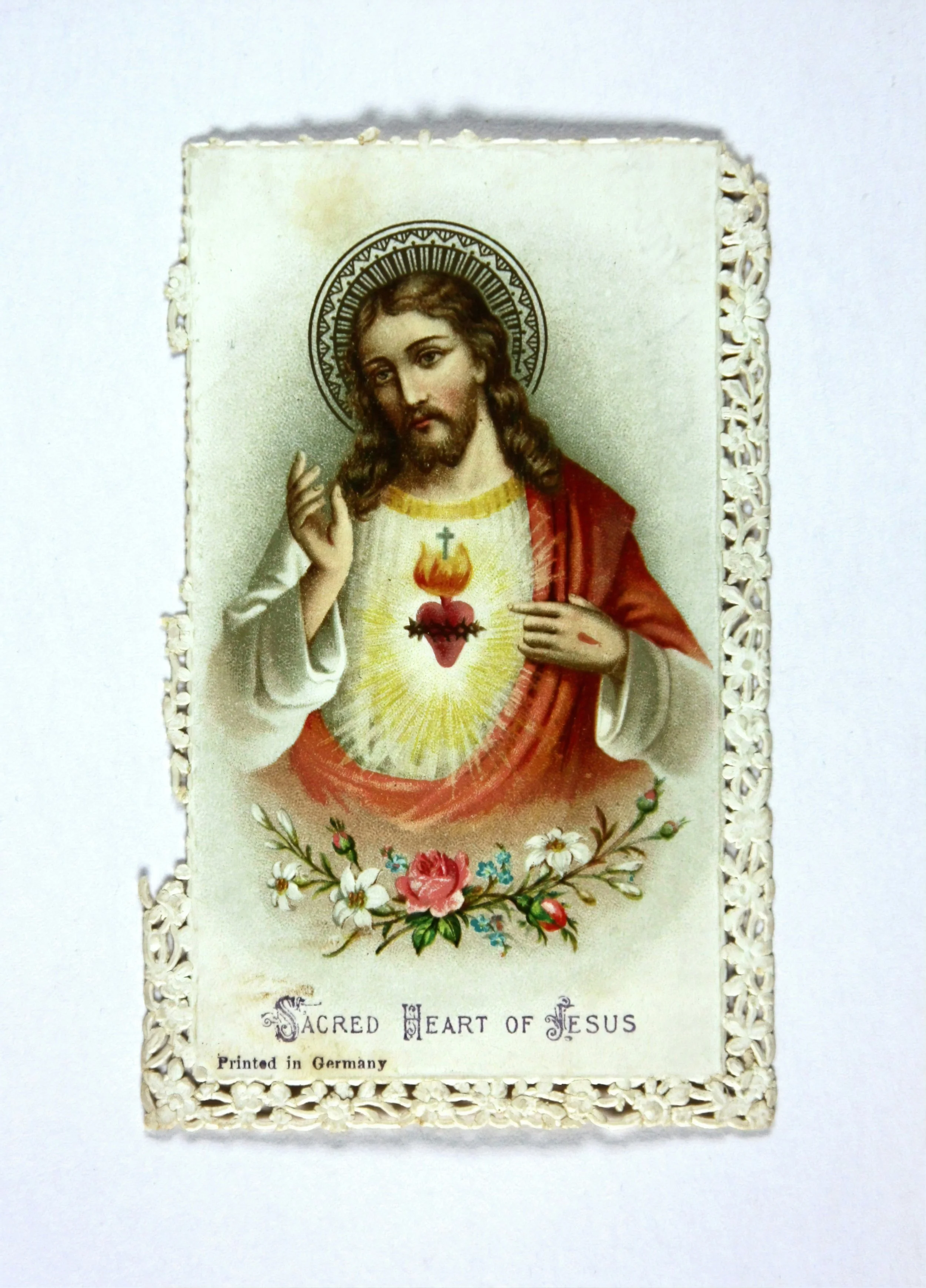
Photo by Museums Victoria on Unsplash
When New Information Arrives
With the rise of the internet, people were finally exposed to historical and cultural evidence that Jesus was not a blue-eyed European — he was Middle Eastern. For many, this wasn't just new information. It was a threat.
Not to their faith. To their ego.
That distinction matters enormously.
How the Ego Defends Itself
The Ego as Courtroom Lawyer
Psychology defines defense mechanisms as tactics the ego uses to reduce anxiety by unconsciously distorting reality. When challenged, the mind doesn't search for truth — it searches for an exit.
You are the judge, the jury, and the courtroom. The ego is the lawyer working every angle to win.
The Loophole
When confronted with evidence that Jesus was not white, many responded with: "It doesn't matter what he looked like — what matters is what he represents."
That sounds reasonable. It isn't. It's a loophole — a narrow escape route the mind uses to avoid extending itself into something uncomfortable. Merriam-Webster defines a loophole as a means of escape — originally a slit in a fortress wall that let defenders fire outward while staying protected.
The ego built the same wall. Different century. Same function.
What the Loophole Is Really Avoiding
The life of Jesus is largely characterized by one thing: compassion — extended without condition, across every social and racial boundary of his time. The parable of the Good Samaritan makes this undeniable. The priest and the Levite passed by the wounded man. The Samaritan — the cultural outsider — stopped.
The story of the good Samaritan
And behold, a certain [a]lawyer stood up and tested Him, saying, “Teacher, what shall I do to inherit eternal life?”
26 He said to him, “What is written in the law? What is your reading of it?”
27 So he answered and said, “ ‘You shall love the Lord your God with all your heart, with all your soul, with all your strength, and with all your mind,’ and ‘your neighbor as yourself.’ ”
28 And He said to him, “You have answered rightly; do this, and you will live.”
29 But he, wanting to justify himself, said to Jesus, “And who is my neighbor?”
Then Jesus answered and said: “A certain man went down from Jerusalem to Jericho, and fell among thieves, who stripped him of his clothing, wounded him, and departed, leaving him half dead. 31 Now by chance a certain priest came down that road. And when he saw him, he passed by on the other side. 32 Likewise, a Levite, when he arrived at the place, came and looked, and passed by on the other side. 33 But a certain Samaritan, as he journeyed, came where he was. And when he saw him, he had compassion. 34 So he went to him and bandaged his wounds, pouring on oil and wine; and he set him on his own animal, brought him to an inn, and took care of him. 35 On the next day, [c]when he departed, he took out two denarii, gave them to the innkeeper, and said to him, ‘Take care of him; and whatever more you spend, when I come again, I will repay you.’ 36 So which of these three do you think was a neighbor to him who fell among the thieves?”
When you picture Christ as someone who looks like you, you extend his compassion to people who look like you. That isn't faith. That's tribalism wearing a spiritual disguise.
The same book that centers Jesus's message on universal love explicitly warns against creating images of heavenly beings — because the builders of those images already knew what we would do with them.
The Deeper Pattern
This isn't really about religion. It's about how the mind protects itself from integration.
The ego separates. It builds beliefs that reinforce identity and filters out anything that might threaten it — generation after generation, through tradition, culture, and inherited assumptions. What gets passed down isn't wisdom. It's the wound dressed up as wisdom.
But we are spirit, and Spirit is wholeness. To better illustrate this, think of a cut finger: the ego is the knife, the wound is separation, but healing is wholeness, which is the healing process. That same intelligence is in you. It doesn't want to destroy the ego — it wants to integrate it.
The Real Question
Let’s revisit the rebuttal once again, “ It doesn’t matter what he looked like — what matters is what he represents,” and close the final loophole. Shifting the narrative from appearance to intangibles still misses the overall point, as scripture explicitly states not to make images of heavenly beings, because it then reduces Christ to what he stood for rather than WHO.
That means, every time you accept any image of Christ or any heavenly beings, you are not just in violation of scripture, but worse, you’ve continued to make it difficult to see Christ in others. Which is the core meaning of His message.




Conclusion.
Every defended belief has a function. The mind isn't broken — it's doing exactly what it was conditioned to do. But conditioning isn't reality.
The first step isn't tearing down what you believe. It's asking why you believe it and being honest enough to sit with the answer.
That's where the real work begins.